Ultimate Guide: EBC Trek with Island Peak Climbing
- soleencounters
The Everest Base Camp Trek with Island Peak Climbing package is the ultimate dream for adventure seekers around the world. It combines the legendary trek to the base of Mount Everest with the thrilling challenge of climbing a 6,189-meter Himalayan peak.
Table of Contents
This deep guide covers everything you need to know to prepare for this life-changing journey. You can check out the full itinerary and booking details directly on the Sole Encounters Adventures Package Page.
Why Combine Everest Base Camp with Island Peak?
The Ultimate Acclimatization Route
High altitude is the biggest challenge in the Himalayas. Your body needs time to get used to thin air. Walking to Everest Base Camp (5,364m) and hiking up Kala Patthar (5,545m) acts as the perfect training ground. By spending over a week trekking slowly up the Khumbu Valley, your body produces more red blood cells. When you finally turn toward Island Peak, you will be strong, healthy, and ready for the summit.
Two Legendary Achievements in One Go
Most people only dream of seeing Mount Everest. On this trip, you get to stand at its base. Then, you turn that trek into a real mountaineering expedition. You will step off the dirt trails and onto raw snow and ice.
Detailed Day-by-Day Journey
Phase 1: The Trek to Everest Base Camp
[Kathmandu] -> [Lukla] -> [Namche Bazaar] -> [Dingboche] -> [Everest Base Camp]
- The Flight to Lukla: Your journey starts with a thrilling flight from Kathmandu or Ramechhap to Tenzing-Hillary Airport in Lukla. This airport sits on a steep hillside and serves as the gateway to the Everest region.
- The Sherpa Capital (Namche Bazaar): You will walk along the Dudh Koshi River and cross high suspension bridges covered in prayer flags. You will spend two nights in Namche Bazaar (3,440m) to acclimatize. Here, you can explore local bakeries and get your very first glimpse of Everest.
- Moving Higher (Tengboche to Dingboche): The trail leads through deep rhododendron forests to the Tengboche Monastery. You will hear the deep chants of monks and see panoramic views of Ama Dablam. As you push past the tree line to Dingboche (4,410m), the landscape becomes rugged and rocky.
- Standing at Everest Base Camp: After walking past the emotional Everest Memorial at Thukla Pass, you reach Gorak Shep. From here, you walk alongside the Khumbu Glacier until you hit the historic rock marking Everest Base Camp (5,364m). You will see the famous Khumbu Icefall and meet climbers preparing to summit the highest mountain on earth.
Phase 2: The Transition to Chukhung Valley
After celebrating at Base Camp and watching the sunrise from Kala Patthar, your path changes. Instead of heading back down to Lukla, you walk east into the Chukhung Valley. This valley sits directly under the massive south wall of Lhotse. In the small village of Chukhung, your guides will check your climbing gear and hold a pre-climb training session.
Phase 3: The Ascent of Island Peak (Imja Tse)
[Chukhung] -> [Island Peak Base Camp] -> [Crampon Point] -> [The Summit]
- Island Peak Base Camp (5,087m): You leave the comfort of teahouses behind and move into a tented camp. The camp sits in a wide valley surrounded by towering walls of rock and ice.
- The Midnight Summit Push: Your summit bid starts around 1:00 AM. Climbing in the dark prevents danger from melting ice and high afternoon winds. You will hike up a steep, rocky trail known as the "Crampon Point." Here, you lace up your heavy mountaineering boots and step onto the glacier.
- Crossing Crevasses and the Headwall: Using ropes and carabiners, you will walk across deep cracks in the ice (crevasses) using aluminum ladders. The hardest part is the 100-meter headwall. It is a steep wall of hard snow and ice. You will use a mechanical tool called a jumar to pull yourself up the fixed ropes.
- The Summit Ridge (6,189m): Once past the headwall, you walk along a sharp, beautiful ridge to the top of Island Peak. The view from the summit is spectacular. You are surrounded by giant mountains like Lhotse, Makalu, and Baruntse.
Training and Fitness Requirements
You do not need to be a professional climber to summit Island Peak, but you must be in excellent physical shape.
Cardiovascular Fitness
You will walk for 5 to 8 hours a day for nearly three weeks. Your heart and lungs must be strong. Start training 4 to 6 months before your trip. Focus on:
- Long hikes with a weighted backpack (10–15 kg)
- Stair climbing or stadium steps
- Running, cycling, or swimming three times a week
Strength and Endurance
Climbing the steep headwall requires upper body and core strength. Include these movements in your weekly workouts:
- Squats and lunges for leg power
- Planks and core twists for stability
- Pull-ups, push-ups, and rows for upper body strength
Mental Toughness
Himalayan climbing is cold, tiring, and windy. There will be moments on the summit push where you feel completely exhausted. Mental discipline and a positive attitude are just as important as physical fitness.
Required Packing and Gear List
When you book through Sole Encounters Adventures, group gear like tents, ropes, and cooking equipment is provided. However, you must bring your own personal clothing and gear.
| Gear Category | Items to Bring |
|---|---|
| Clothing Layers | Merino wool base layers, fleece jacket, waterproof shell jacket, heavy down jacket (rated to -20°C). |
| Footwear | Broken-in trekking boots, double mountaineering boots (like La Sportiva Baruntse or Scarpa Inverno), warm wool socks. |
| Climbing Gear | Climbing helmet, harness, crampons, ice axe, ascender (Jumar), descender (Figure 8), lockable carabiners. |
| Hand & Headwear | Thin liner gloves, heavy waterproof climbing gloves, warm beanie, buff or neck gaiter, UV-protection sunglasses, headlamp with extra batteries. |
| Sleeping & Packs | Four-season sleeping bag (rated to -15°C or lower), 50L–60L duffel bag (for porters), 30L daypack (for you). |
Note: If you do not want to buy expensive climbing gear, you can easily rent boots, harnesses, and ice axes in the village of Chukhung for a very low price.
Best Time to Go: Seasons and Weather
There are two distinct windows during the year when the weather is safe enough for trekking and climbing in the Everest region.
Best Seasons: Spring (March to May) | Autumn (September to November)
1. Spring (March to May)
Spring is the most popular time for climbing. The weather is warm, and the landscape is full of blooming rhododendron flowers. Everest climbing expeditions set up camp during these months, making Base Camp a lively place. The weather is usually clear in the mornings, though clouds can build up in the afternoon.
2. Autumn (September to November)
Autumn offers the crispest, clearest views of the year. The summer monsoon rains wash away all the dust, leaving deep blue skies. While the temperatures are colder than in spring, the weather is much more stable, with less chance of unexpected snowstorms.
Tipping Guidelines for Sherpas and Porters
Your trekking porters and climbing Sherpas work incredibly hard to keep you safe and comfortable. Tipping is a traditional and expected way to show your gratitude in the Himalayas.
- Tipping Pool: It is best to collect tips as a group at the end of the trip.
- Trekking Staff: Plan on tipping around $15 to $20 USD per day for your main guide, and $10 to $15 USD per day for your porter (divided among your group members).
- Climbing Sherpas: Your summit climbing Sherpa takes on great risk. The industry standard is a Summit Bonus of $200 to $250 USD if you reach the top (or make a strong attempt).
Always give your tips in cash (preferably Nepalese Rupees or clean, un-torn US Dollar bills) on the last night of the trip in Lukla.
Safety, Altitude, and Helicopter Logistics
Your safety in the mountains depends on three things: hydration, pacing, and monitoring.
- Drink Water: You lose moisture quickly through your breath at high altitudes. Drink 4 to 5 liters of water every single day. Use water purification tablets or filters to avoid getting sick.
- Walk Slowly (Bistari, Bistari): You will hear your Sherpa guides say "Bistari, bistari" constantly. It means "slowly, slowly." Even if you feel strong, do not rush. Rushing drains your energy and increases your risk of Altitude Sickness (AMS).
- Helicopter Evacuation: If you get severe altitude sickness, the only cure is to go down immediately. Make sure your travel insurance explicitly covers mountaineering up to 6,500 meters and emergency helicopter evacuation.
Frequently Asked Questions (FAQ) About Local Food
What kind of food will I eat on the trek?
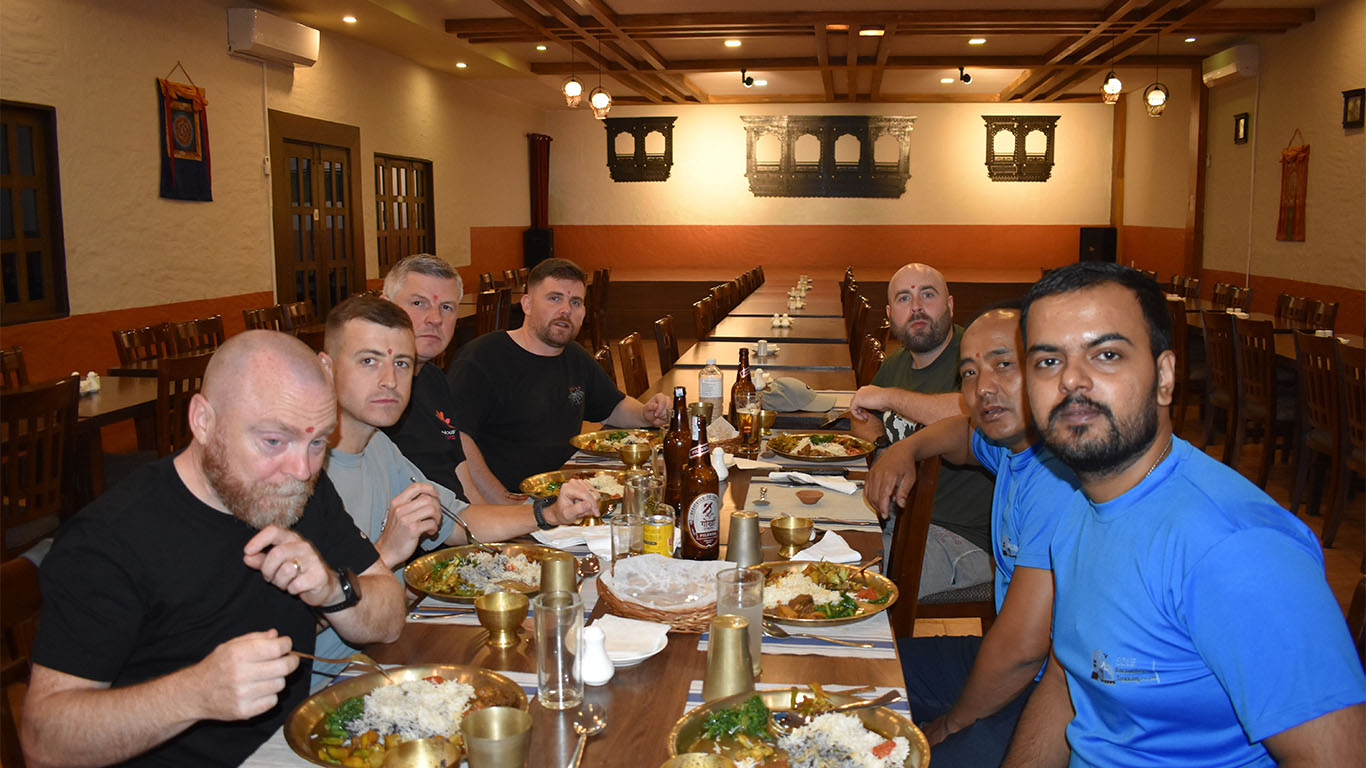
The most famous dish is Dal Bhat (rice, lentil soup, and vegetable curry). It is healthy, filling, and full of energy. Teahouses also serve pasta, potatoes, eggs, pancakes, soups, and even pizza.
Can I eat meat on the trail?
It is highly recommended to stay vegetarian above Namche Bazaar. All meat must be carried up the mountain by foot or yak without refrigeration. Eating meat high up increases your risk of getting food poisoning.
What do we eat at Island Peak Base Camp?
During the tented camp days, our expedition cook prepares hot, fresh meals. You will get plenty of carbohydrates like porridge, noodles, and fried rice to fuel your midnight climb.
Find More Trips with Sole Encounters Adventures
Looking for a different style of Himalayan travel? If you want to explore beyond the classic Island Peak route, we offer a wide variety of alternate trekking, climbing, and touring packages across Nepal, Tibet, and Bhutan.
Here are some of our most loved trips you can explore on our main site:
- Everest Region Treks: Try the Everest Base Camp Trek Nepal (15 Days) or challenge yourself on the Everest Three High Passes Trek (20 Days).
- Annapurna Region Adventures: Join a group for the scenic Annapurna Base Camp and Ghorepani Poon Hill Trek or the world-renowned Annapurna Circuit Trek.
- Wild Off-the-Beaten-Path Trails: Discover the pristine landscapes of the Manaslu Circuit Trek or walk through lush forests on the Langtang Valley Trek.
- Full Mountaineering Expeditions: For advanced climbers ready for giant objectives, we run world-class support logistics for the Ama-Dablam Expedition.
Choose Your Himalayan Adventure
[ View Packages ] -> [ Consult Guides ] -> [ Prepare Gear ] -> [ Summit Island Peak ]
An adventure of this scale requires perfect planning. From booking internal flights to securing peak permits from the Nepal Mountaineering Association, handling the details on your own can be overwhelming.
Working with a trusted local company ensures you have certified mountain guides, proper emergency equipment, and comfortable teahouse bookings.
Are you ready to test your limits and stand high above the clouds? Explore all your options on our official website at www.soleencounterstrek.com. If you have any specific questions about pricing, group discounts, or custom routes, please reach out to our team directly via email at info@soleencounterstrek.com to connect with a local expert today!
Recent Posts
.jpg)
3rd Jul, 2025
.jpg)
4th Jul, 2025
.jpg)
4th Jul, 2025
.jpg)
7th Jul, 2025
.jpg)
8th Jul, 2025
.jpg)
8th Jul, 2025
.jpg)
8th Jul, 2025

10th Jul, 2025