

- Home »
- Nepal »
- Trekking in Nepal »
- Everest Region Treks »
- Everest View Trek
Everest View Trek

Key Information
Everest View Trek Overview
The Everest View Trek is one of the best short trekking experiences in Nepal, designed for travelers who want to see Mount Everest and explore the famous Khumbu region without committing to the longer and more demanding Everest Base Camp trek. This journey offers a balanced combination of Himalayan scenery, Sherpa culture, comfortable trekking routes, and manageable altitudes, making it ideal for beginners, families, and travelers with limited time, The trek takes place in the legendary Everest region, where dramatic mountain landscapes dominate the horizon. Along the trail, trekkers enjoy stunning views of Mount Everest (8,848.86 m / 29,031 ft), Ama Dablam, Lhotse, Nuptse, and Thamserku, some of the most recognizable peaks in the world. The route passes through alpine forests, suspension bridges over glacial rivers, and traditional Sherpa villages that reflect centuries of Himalayan culture and mountain heritage, The adventure begins with a thrilling mountain flight to Lukla, often described as one of the most scenic flights in the world. During busy trekking seasons, flights may depart from Ramechhap Airport, reached by a scenic drive from Kathmandu. From Lukla, the trail follows the Dudh Koshi River valley through charming settlements such as Phakding, Monjo, and Namche Bazaar, allowing trekkers to gradually acclimatize while enjoying spectacular mountain views.
Experience the Famous Everest Viewpoint
One of the most memorable highlights of the Everest View Trek is the hike to the famous Everest View Hotel viewpoint. Located above Namche Bazaar at approximately 3,880 meters (12,730 ft), this viewpoint offers one of the best panoramic views of Mount Everest that can be reached without trekking to extreme altitude, From the terrace of the hotel, trekkers can relax with a cup of tea while gazing at the towering Himalayan skyline. The view includes Mount Everest, Ama Dablam, Lhotse, Nuptse, and Thamserku, creating a breathtaking natural panorama. Many travelers describe this moment as the emotional highlight of their trek, as it allows them to see the world's highest mountain standing above the Khumbu Valley.
The Everest View Hotel itself is famous for being one of the highest altitude hotels in the world, making this stop both scenic and unique.
Discover Sherpa Culture and Himalayan Heritage
The Everest region is deeply connected to the Sherpa community, whose culture and traditions have shaped the history of Himalayan exploration. Trekking through the Khumbu Valley allows travelers to experience traditional Sherpa villages, Buddhist monasteries, prayer wheels, and colorful prayer flags that symbolize spiritual beliefs rooted in Tibetan Buddhismm, The village of Namche Bazaar, located at 3,440 meters (11,286 ft), is the cultural and commercial heart of the region. Known as the gateway to Everest, Namche has long served as the main trading hub for the Khumbu Valley and the starting point for many Everest expeditions. Trekkers can visit the Sherpa Culture Museum, local markets, bakeries, and viewpoint ridges that offer spectacular mountain scenery, The region also carries the legacy of legendary mountaineers such as Sir Edmund Hillary and Tenzing Norgay, who first reached the summit of Mount Everest in 1953. Walking these historic trails gives trekkers a powerful connection to the early history of Himalayan mountaineering.
Trek Through Sagarmatha National Park
The Everest View Trek takes place within Sagarmatha National Park, a UNESCO World Heritage Site known for its dramatic mountain landscapes and unique ecosystems. This protected area preserves some of the most spectacular scenery in the Himalayas while safeguarding rare wildlife and alpine vegetation, The forests of Sagarmatha National Park contain rhododendron, pine, juniper, and fir trees, which create beautiful trekking environments, especially during spring when rhododendron flowers bloom across the hillsides. Wildlife in the park includes Himalayan tahr, musk deer, Himalayan pheasants, and occasionally the elusive snow leopard, Ancient monasteries, prayer walls, and sacred landmarks along the trail add a spiritual dimension to the journey, making the trek not only scenic but also culturally meaningful.
Everest View Trek Difficulty
The Everest View Trek is considered an easy to moderate Himalayan trek, suitable for most travelers with a basic level of fitness. The highest point of the trek reaches approximately 3,880 meters (12,730 ft) near the Everest View Hotel, which is significantly lower than the Everest Base Camp trek or other high altitude Himalayan routes, Daily walking distances typically range between 4 to 6 hours, with gradual ascents that allow trekkers to adjust comfortably to the elevation. The trails are well established and widely used by trekkers, climbers, and local villagers. While the trek is accessible to beginners, it still provides an authentic Himalayan trekking experience. Proper acclimatization, hydration, and pacing remain important, and having experienced guides greatly enhances both safety and enjoyment.
Why Choose the Everest View Trek
The Everest View Trek is ideal for travelers who want to see the world's highest mountain and experience Sherpa culture without committing to a long expedition. It provides many of the highlights of the Everest region in a shorter and more manageable itinerary, One of the key advantages of this trek is that it offers spectacular Everest views at relatively lower altitude, reducing the risks associated with high altitude trekking. The route also includes Namche Bazaar, which is one of the most vibrant mountain towns in Nepal and a cultural center of the Khumbu region.
For travelers planning future Himalayan adventures, the Everest View Trek also serves as an excellent introduction to trekking in the Everest region, helping trekkers gain experience before attempting longer routes such as the Everest Base Camp trek, Gokyo Lakes trek, or high altitude climbing expeditions.
Another reason many travelers choose this trek is the combination of mountain scenery, Sherpa hospitality, cultural encounters, and comfortable teahouse accommodation, all within a relatively short timeframe.
Organized Trek Logistics and Support
At Sole Encounters Adventures, every Everest View Trek is carefully organized to ensure a safe, comfortable, and enriching Himalayan experience, All necessary mountain flights to Lukla, airport transfers, and ground transportation are arranged in advance. Our team also manages all required trekking permits, including Sagarmatha National Park entry permits and Khumbu local permits, Each trek is led by licensed English speaking trekking guides who are trained in mountain safety, altitude awareness, and cultural interpretation. Our experienced porters carry trekking equipment, allowing travelers to walk comfortably while enjoying the scenery, Accommodation is provided in traditional Himalayan teahouses, where trekkers can relax in warm dining halls and enjoy freshly prepared mountain meals such as dal bhat, soups, noodles, rice dishes, and Tibetan bread, This complete logistical support allows travelers to focus entirely on enjoying the landscapes, culture, and unforgettable views of the Everest region.
Ghorepani Poon Hill Trek vs Everest View Trek
Both the Ghorepani Poon Hill Trek and the Everest View Trek are excellent short treks in Nepal, but they offer very different experiences depending on what travelers are seeking, The Ghorepani Poon Hill Trek is located in the Annapurna region and is famous for its sunrise views over the Annapurna and Dhaulagiri mountain ranges. The trek reaches a maximum altitude of around 3,210 meters (10,531 ft) at Poon Hill and passes through beautiful rhododendron forests and traditional Gurung villages. It is often considered one of the best beginner treks in Nepal because it is accessible by road from Pokhara and does not require mountain flights.
The Everest View Trek, on the other hand, takes place in the legendary Everest region and offers direct views of Mount Everest and other 8,000 meter peaks. The trek includes a scenic flight to Lukla, walks through Sherpa villages, and visits Namche Bazaar, the gateway to Everest expeditions.
In terms of scenery, the Everest View Trek provides closer views of the highest mountains in the world, while the Ghorepani Poon Hill Trek offers wide panoramic views of the Annapurna range. The Everest region also has a stronger connection to Himalayan mountaineering history and Sherpa culture.
Travelers who want to see Mount Everest itself and experience the Khumbu region often choose the Everest View Trek. Those who prefer a forest rich landscape with easier access from Pokhara may prefer the Ghorepani Poon Hill Trek, Both treks are excellent options, but the Everest View Trek offers the unique experience of standing in the Everest region and seeing the world's highest mountain with your own eyes.
More Himalayan Adventures with Sole Encounters Adventures
Beyond the Everest View Trek, Sole Encounters Adventures offers a diverse range of trekking and climbing journeys across Nepal’s most iconic Himalayan regions. Our adventures are carefully designed for travelers who want authentic mountain experiences supported by professional guides, reliable logistics, and deep local knowledge. Whether you are looking for a scenic cultural trek, a classic Himalayan expedition, or your first mountaineering challenge, our team organizes every detail so you can focus on enjoying the journey.
Some of the most popular trekking routes we operate include the Annapurna Base Camp Trek, which leads trekkers into the heart of the Annapurna Sanctuary surrounded by towering peaks, and the Annapurna Circuit with Tilicho Lake Trek, a legendary Himalayan route that crosses the high Thorong La Pass and visits one of the highest lakes in the world. The Manaslu Circuit Trek offers a remote and culturally rich adventure around the world’s eighth highest mountain, while the Langtang Valley Trek and Tamang Heritage Langtang Trek provide stunning mountain scenery combined with unique Tamang cultural experiences close to Kathmandu. For travelers seeking hidden valleys and spiritual landscapes, the Manaslu Tsum Valley Trek reveals ancient monasteries and traditional Himalayan villages. Experienced trekkers can challenge themselves with the spectacular Everest Three High Passes Trek, one of the most adventurous routes in the Everest region.
For those interested in Himalayan mountaineering, we also organize guided climbing expeditions on Nepal’s famous trekking peaks. Popular climbing adventures include Mera Peak Climbing (6,476 m), known for its incredible views of five 8,000 meter mountains, Island Peak Climbing, often combined with the Everest Base Camp trek, and Lobuche Peak Climbing , which offers a rewarding technical challenge near the Khumbu Glacier. Beginner friendly climbing options such as Yala Peak Climbing in the Langtang region and Pisang Peak Climbing in the Annapurna region provide excellent introductions to Himalayan climbing.
Every journey with Sole Encounters Adventures is supported by experienced mountain guides, dedicated porters, well planned logistics, and strong safety standards. Our goal is not only to take travelers into the Himalayas, but also to create meaningful travel experiences that connect visitors with Nepal’s landscapes, cultures, and mountain traditions.
Trek the Himalayas with Sole Encounters Adventures
The Himalayas are more than mountains. They are places of history, culture, and life changing adventure. At Sole Encounters Adventures, we believe every journey should connect travelers with the landscapes and communities that make Nepal unique, Our experienced team organizes every detail, from permits and flights to accommodation, guides, and safety support, ensuring that each trek becomes a memorable and enriching experience, If you dream of seeing Mount Everest in person but have limited time, the Everest View Trek offers the perfect balance of adventure, culture, and Himalayan beauty, Travel with Sole Encounters Adventures and discover why the Everest region continues to inspire travelers from around Everest View Trek is a short Himalayan trek in Nepal that offers panoramic views of Mount Everest, Ama Dablam, and Lhotse. The trek begins with a scenic flight to Lukla and passes through Sherpa villages such as Phakding and Namche Bazaar before reaching the Everest View Hotel viewpoint. the world.
Everest View Trek Itinerary Close All
After an early breakfast, transfer to Manthali Airport for the short but spectacular mountain flight to Lukla, the gateway to the Everest region. On arrival, meet your porter team and begin trekking along the Dudh Koshi River. The trail passes prayer wheels, mani stones, and small Sherpa settlements before reaching the peaceful riverside village of Phakding.
Flight: 20 min | Distance: 6–8 km (4–5 mi) | Duration: 3–4 hrs | Ascent: +50 m (+164 ft) | Descent: −300 m (−984 ft)
Food
Breakfast / Lunch / Dinner
Accommodation
Teahouse
Elevation
2650
Follow the river valley through pine forest, crossing several long suspension bridges decorated with colorful prayer flags. After entering Sagarmatha National Park at Monjo, the trail climbs steadily toward Namche. As the path steepens, the mountains begin to appear, and on clear days, you may catch your first distant glimpse of Mount Everest before reaching the lively Sherpa capital.
Distance: 10–11 km (6–7 mi) | Duration: 6–7 hrs | Ascent: +830 m (+2,723 ft) | Descent: −100 m (−328 ft)
Food
Breakfast / Lunch / Dinner
Accommodation
Teahouse
Elevation
3440
Start the morning with a scenic hike above Namche Bazaar to the famous Everest View Hotel. As the trail climbs through pine forests and open ridges, breathtaking views of Mount Everest, Ama Dablam, Lhotse, and Nuptse appear across the Himalayan skyline. After enjoying the unforgettable panorama and a relaxing tea break at the viewpoint, descend back through Namche and follow the peaceful trail along the Dudh Koshi River to the quiet village of Monjo for an overnight stay.
Distance: 12–13 km (7–8 mi) | Duration: 6–7 hrs | Ascent: +440 m (+1,444 ft) | Descent: −605 m (−1,985 ft)
Food
Breakfast / Lunch / Dinner
Accommodation
Teahouse
Elevation
2835
Today is your final walk in the Himalayas. The trail follows the scenic Dudh Koshi River through forests and traditional Sherpa villages with gentle ups and downs along the valley. Passing through settlements like Phakding and crossing suspension bridges, the route gradually leads back to Lukla. After about 5 to 6 hours of walking, you arrive in Lukla for your final night in the mountains, In the evening, enjoy a farewell dinner with your trekking crew and thank them for their support during the journey.
Distance: 13 km (8 mi) | Duration: 5–6 hrs | Ascent: +200 m (+656 ft) | Descent: −150 m (−492 ft)
Food
Breakfast / Lunch / Dinner
Accommodation
Teahouse
Elevation
2860
Take an early morning mountain flight from Lukla to Manthali, enjoying final aerial views of the Everest region. After landing, continue by road through the rolling hills and countryside back to Kathmandu. The drive offers a gradual return to city life after days in the high Himalayas.
Flight: 20 min | Drive: 132 km (82 mi) | Duration: 4–5 hrs | Ascent: +926 m (+3,038 ft)
.
Everest View Trek Cost Includes
-
All necessary permits, including Sagarmatha National Park Entry Permit and Khumbu Pasang Lhamu Rural Municipality Permit, along with all required crew taxes
-
Experienced English speaking, government registered trekking guide and local porters to carry luggage (1 porter for every 2 trekkers)
-
Guide and porter salaries, insurance, equipment, transport, meals, and accommodation
-
Welcome dinner at a traditional Nepali restaurant
-
Accommodation in mountain tea houses during the trek (twin sharing rooms)
-
Three meals per day during the trek (breakfast, lunch, and dinner)
-
Comprehensive First Aid kit carried by the guide
-
Oximeter to monitor heart rate and oxygen saturation during the trek
-
Round trip domestic flights required for the trek and related transportation
-
Duffle bag and sleeping bag provided for use during the trek
-
All government and local taxes included
Everest View Trek Cost Excludes
-
International flight tickets & Nepal visa fees upon arrival
-
Food and drinks in Kathmandu
-
City entrance fees and sightseeing fees in Kathmandu
-
Hot and bottled drinks during the trek
-
Electronic device recharging costs along the trekking route
-
Travel insurance including emergency medical evacuation
-
Extra costs for WiFi, hot showers, laundry, and device charging during the trek
-
Single room supplement in Kathmandu and extra hotel nights due to early arrival or extended stay
-
Tipping for trekking crews including driver, porter, and guides (recommended 15% to 20% of trip cost)
-
Additional expenses caused by flight delays or cancellations due to bad weather
-
Personal trekking gear and equipment
-
Hotel accommodation in Kathmandu unless specified and airport pick up extra cost
Everest View Trek Altitude Profile
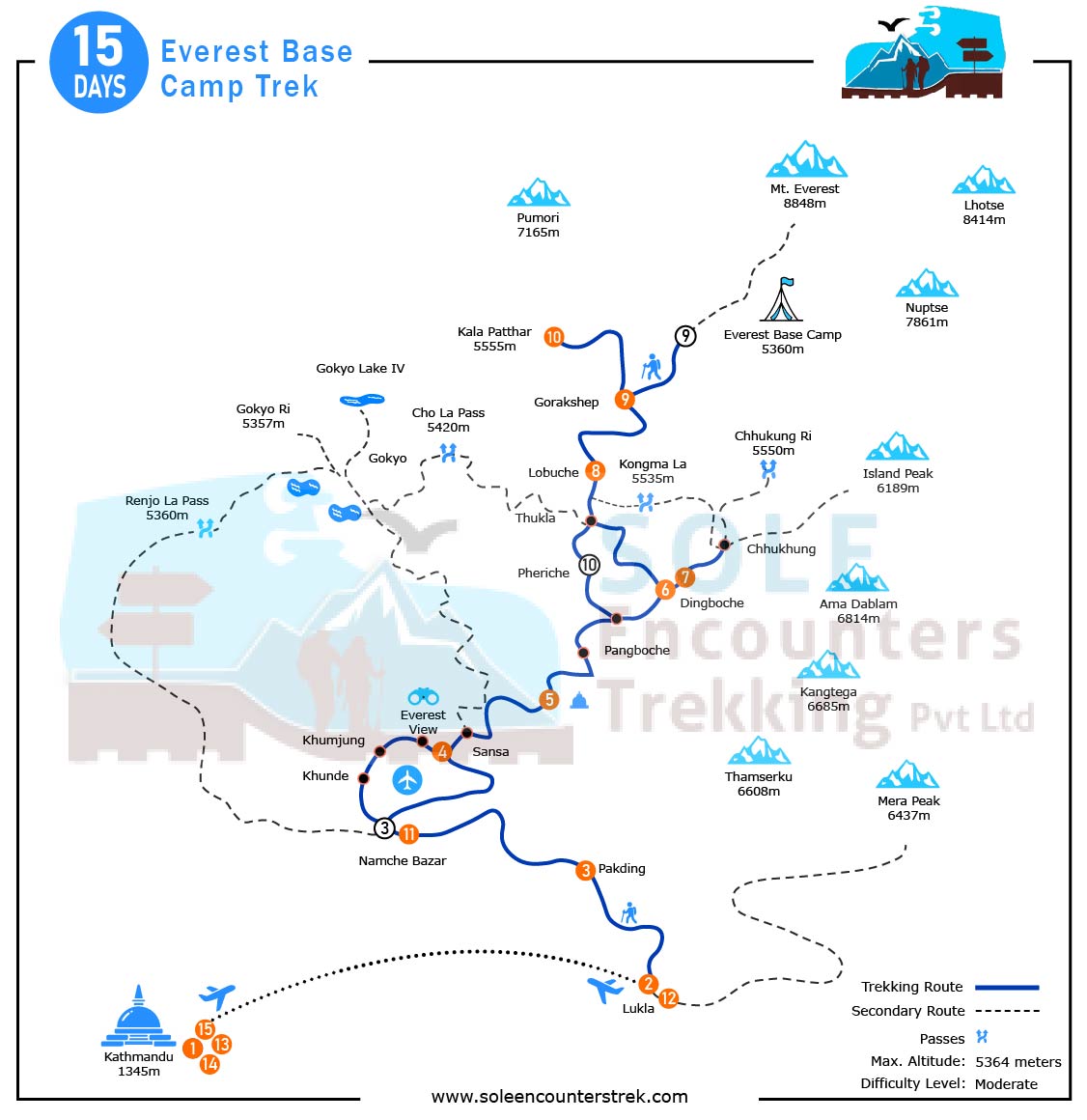
Everest View Trek Route Map
FAQs Close All
The Everest View Trek is one of the most rewarding short treks in Nepal, offering travelers the opportunity to see Mount Everest and explore the famous Khumbu region without trekking all the way to Everest Base Camp. This trek combines breathtaking Himalayan scenery with authentic Sherpa culture and beautiful landscapes inside Sagarmatha National Park.
The trek is perfect for beginners, families, photographers, and travelers who have limited time but still want to experience the Everest region. Since the highest point of the trek reaches about 3,880 meters at the Everest View Hotel, it offers incredible views of Mount Everest, Ama Dablam, Lhotse, and other peaks while remaining at a moderate altitude compared to longer Himalayan treks.
The Everest View Trek is considered an easy to moderate Himalayan trek. Trekkers usually walk between 4 and 6 hours each day on well established trails that include gradual uphill climbs, stone steps, and suspension bridges.
Although the trek reaches elevations above 3,000 meters, it does not require technical climbing skills. Anyone with a basic level of fitness and the ability to walk for several hours a day can complete the trek comfortably. With proper pacing and support from experienced guides, most trekkers find the journey enjoyable and manageable.
The best seasons for the Everest View Trek are spring and autumn. Spring runs from March to May, when the weather is pleasant and rhododendron forests bloom along the trails. Autumn runs from September to November and is the most popular trekking season due to clear skies and excellent mountain visibility.
Winter from December to February is colder but still suitable for trekking with fewer crowds. The monsoon season from June to August brings rainfall and cloud cover that may reduce mountain views, although the region is quieter during this period.
Trekkers need two permits to trek in the Everest region. The first is the Sagarmatha National Park Entry Permit, which allows entry into the protected national park area. The second is the Khumbu Pasang Lhamu Rural Municipality Permit issued by the local government of the Khumbu region.
These permits help support conservation efforts and local community development in the Everest region. Most trekking companies arrange these permits for trekkers before the journey begins.
Hotel accommodation in Kathmandu is not included in the standard Everest View Trek package. Travelers can choose their preferred hotel according to their comfort level and budget.
If accommodation in Kathmandu is needed, Sole Encounters Adventures can help arrange hotel bookings upon request for an additional cost.
During the Everest View Trek, accommodation is provided in traditional Himalayan teahouses. These mountain lodges offer simple but comfortable twin sharing rooms with beds, mattresses, and blankets. Bathrooms are usually shared.
Meals are served in the main dining area and include a wide range of dishes such as dal bhat, fried rice, noodles, soups, pasta, eggs, pancakes, Tibetan bread, and hot drinks. Dal bhat is one of the most common and nutritious meals for trekkers as it provides a balanced combination of rice, lentils, vegetables, and pickles.
Yes, Kathmandu has many banks, ATMs, and licensed money exchange counters where travelers can easily exchange foreign currency or withdraw Nepalese rupees. It is recommended to exchange money or withdraw sufficient cash before leaving Kathmandu for the trek.
In the Everest region, Namche Bazaar has an ATM and a few money exchange services. However, these services may not always be reliable due to connectivity issues or limited cash availability. For this reason, trekkers are strongly advised to carry enough cash from Kathmandu to cover expenses during the trek.
Packing the right gear is important for a comfortable trekking experience. We recommend bringing essential items such as warm clothing layers, trekking pants, thermal base layers, a down jacket, waterproof jacket, trekking boots, gloves, hat, sunglasses, and sunscreen.
Other useful items include a daypack, reusable water bottle, headlamp, personal toiletries, and basic medications. A sleeping bag and duffle bag can be provided for use during the trek if needed.
Before your trip begins, Sole Encounters Adventures provides a recommended trekking packing list and guidance on what to carry for the Everest View Trek. Our team will help you prepare properly so you bring everything necessary while avoiding unnecessary weight during the trek.
Sole Encounters Adventures is a locally operated trekking company in Nepal dedicated to creating safe, authentic, and memorable Himalayan travel experiences. Our government licensed trekking guides have extensive experience in the Everest region and provide professional support throughout the journey.
We organize every detail of the trek including permits, guides, porters, flights, and trekking logistics so travelers can focus entirely on enjoying the adventure.
Booking the Everest View Trek with us is simple. Travelers can contact us through our website inquiry form, email, or messaging platforms to confirm travel dates and itinerary details. Once the booking is confirmed, a small deposit secures the trip and our team arranges all necessary permits and trekking preparations.
We also provide pre trek guidance, travel tips, and a detailed packing checklist to ensure you are fully prepared for your Himalayan adventure.
Weather in the Everest region can sometimes delay flights to Tenzing-Hillary Airport in Lukla. If this happens, the first option is to use a buffer day and wait for the next available flight, which usually operates once the weather improves.
If flights remain cancelled and you prefer not to wait, you can choose a helicopter flight to or from Lukla, which can often operate in more flexible conditions. This option is available with an additional cost.
In rare cases when flights are disrupted for a longer period, another alternative is to adjust the itinerary and divert your trek to the Annapurna region, where access is by road and not dependent on mountain flights.
Our team always monitors the situation and helps arrange the best available solution to keep your trip running smoothly.
Essential Trip Information Close All
When embarking on the Everest View Trek, it's important to have the right trekking gear to ensure your comfort, safety, and enjoyment. The specific gear you need may vary depending on the season you plan to trek in. Here's a general list of personal trekking gear you should consider for different seasons:
General Trekking Gear:
- Hiking boots: Sturdy, comfortable, and waterproof hiking boots with good ankle support.
- Trekking socks: Moisture-wicking and cushioned socks to keep your feet dry and comfortable.
- Trekking pants: Lightweight and quick-drying pants that provide freedom of movement.
- Moisture-wicking base layers: Tops and bottoms made of synthetic or merino wool material to regulate body temperature and manage sweat.
- Insulating layers: Fleece jackets or down jackets to provide warmth in cold weather.
- Waterproof and windproof outer shell: A waterproof and breathable jacket to protect you from rain, wind, and snow.
- Warm hat and gloves: Insulated and waterproof accessories to protect your head, ears, and hands from the cold.
- Sunglasses: UV-protected sunglasses to shield your eyes from the glare of the sun and snow.
- Sunscreen and lip balm: SPF-rated sunscreen and lip balm to protect your skin from sunburn and dryness at higher altitudes.
- Trekking poles: Optional but beneficial for added stability and support during steep ascents and descents.
Additional Gear for Different Seasons:
-
Spring (March to May):
- Lightweight and breathable clothing for warmer temperatures during the day.
- Rain gear, such as a rain jacket and rain pants, as spring brings occasional showers.
- Extra layers for colder mornings and evenings.
-
Summer (June to August):
- Lightweight and breathable clothing suitable for hot and humid conditions.
- Insect repellent to protect against mosquitoes and other bugs.
- Rain gear, as summer brings monsoon rains to the region.
-
Autumn (September to November):
- Layered clothing for varying temperatures, as autumn offers pleasant days and cooler nights.
- A warm sleeping bag, as temperatures can drop significantly at higher elevations.
- A beanie or hat to keep your head warm during colder mornings and evenings.
-
Winter (December to February):
- Insulated and waterproof clothing, including down jackets, thermal base layers, and waterproof pants.
- Warm gloves and thermal socks to protect against freezing temperatures.
- Sturdy crampons for traction on icy trails at higher altitudes.
Remember to pack a well-fitted backpack, a refillable water bottle, a headlamp, and any necessary personal medications. It's also advisable to consult with your trekking agency or guide for specific gear recommendations based on the season and current weather conditions.
Prioritize lightweight, moisture-wicking, and layering options to adapt to changing weather and to ensure your comfort throughout the trek.
The weight limitation for flights from Lukla Airport can vary slightly depending on the airline and aircraft used. However, as a general guideline, the weight limit for both checked baggage and hand baggage on Lukla flights is typically around 15 kilograms (33 pounds) per person.
It's important to note that this weight limit includes both your checked baggage and any carry-on or hand baggage you may have. Exceeding the weight limit may result in additional charges or the need to offload some items to meet the weight restrictions.
To ensure compliance with the weight limitations, it's recommended to pack efficiently and carry only the essential items for your trek. If you have additional luggage or gear that exceeds the weight limit, you may need to make arrangements to store or transport them separately in Kathmandu.
It's always a good idea to check with your airline or travel agent for the specific weight restrictions and any additional guidelines or requirements before your Lukla flight. They can provide you with the most accurate and up-to-date information to help you prepare and pack accordingly.


- Best price guaranteed
- No booking fees
- E-ticket/Mobile voucher
Response Time 3 Hours , Response Rate 100%
Similar Packages


14 Reviews
19 Reviews

26 Reviews
25 Reviews
23 Reviews
Emily H.
AustraliaA Truly Unforgettable Himalayan Experience
16th March, 2026
Our Everest View Trek with Sole Encounters Adventures was an incredible experience from start to finish. The trek offered breathtaking views of Mount Everest, Ama Dablam, and the surrounding Himalayan peaks. Our guide was knowledgeable, friendly, and made sure we were comfortable and safe throughout the journey. Walking through beautiful Sherpa villages and reaching the Everest View Hotel viewpoint was a dream come true. If you want a short Everest trek with amazing scenery and authentic culture, this is the perfect adventure
Jessica M.
United KingdomPerfect Short Trek to See Mount Everest
14th March, 2026
The Everest View Trek was exactly what we were looking for. We had limited time in Nepal but still wanted to see Mount Everest. The itinerary was well organized and allowed us to experience Namche Bazaar, Sagarmatha National Park, and the famous Everest View Hotel. The team at Sole Encounters Adventures handled everything professionally, including permits, flights, guides, and porters. Our guide shared interesting stories about Sherpa culture and the history of Everest expeditions. Highly recommended for anyone looking for a short Everest trekking experience.
Amanda K.
United StatesProfessional Guides and Great Organization
7th March, 2026
I cannot thank Sole Encounters Adventures enough for organizing such a fantastic trek. Our guide was experienced, patient, and always attentive to our safety and comfort. The trekking route from Lukla to Namche Bazaar was stunning, with suspension bridges, forests, and amazing mountain views. Reaching the Everest View Hotel and seeing Everest with our own eyes was a powerful and emotional moment. Everything from permits to teahouse accommodation was perfectly arranged.
Sara N.
SwazilandWhy Travelers Trust Sole Encounters Adventures
24th February, 2026
Travelers consistently choose Sole Encounters Adventures for their Everest region treks because of the company’s commitment to safety, authentic experiences, and professional guiding services. Our local guides have extensive knowledge of the Everest region, ensuring every traveler enjoys a safe and memorable journey through the Himalayas.
From arranging trekking permits and flights to organizing guides, porters, accommodation, and meals, our team focuses on providing seamless trekking experiences that allow travelers to fully enjoy the beauty of the Everest region.
Christina Fong
AustriaStunning Mountain Views and Warm Sherpa Hospitality
16th February, 2026
The Everest View Trek exceeded our expectations. The views of Everest, Ama Dablam, and Lhotse were breathtaking, especially from the viewpoint above Namche Bazaar. What made the experience even more special was meeting the local Sherpa people and learning about their culture and traditions. Our guide from Sole Encounters Adventures was extremely knowledgeable about the region and helped us understand the history of Everest. The trek was well paced and perfect for beginners
Samantha beggars
AustraliaSafe, Well Planned and Highly Recommended Trek
10th February, 2026
This was our first trekking experience in Nepal and it was absolutely amazing. Sole Encounters Adventures provided excellent service from the moment we arrived. The trek was well planned with comfortable teahouses, delicious local food, and experienced guides. The highlight was definitely standing at the Everest View Hotel and seeing Mount Everest for the first time. It is a short trek but offers some of the best Himalayan views. I would recommend this company to anyone planning a trek in Nepal.
Ej louise guanco
FranceAwesome and great place
12th September, 2024
Awesome place, nice people very accommodating tour guide is friendly.
Great experience. Highly recommended!😊❤
Cindy L
United StatesSuccessfully fulfilled our dreams during this trip
1st February, 2024
The entire experience was absolutely incredible, and I am eager to go on another adventure. Our guide, Prem, played a crucial role in making the journey memorable. He ensured we were well-fed and kept us informed about the surroundings. His impressive English skills and extensive knowledge of the Himalayas truly amazed us.
The dream-like experience of flying to Lukla and embarking on a few days trek to the Everest viewpoint surpassed all our expectations. We successfully fulfilled our dreams during this trip, and it was all thanks to the reputable company we chose. We highly recommend them for their exceptional services.
Thank you once again for providing us with such a remarkable experience.
Tanel P
EstoniaGreat tour operator with young, funny and knowleadgable guides.
24th December, 2020
Almost a year ago I stepped my foot down in Lukla. There are three things that make these kind of treks what they should be, a memory for a lifetime, your group, your operator who takes care of you and guides who take you all the way through it. I was extremely lucky with all three.