

- Home »
- Nepal »
- Trekking in Nepal »
- Everest Region Treks »
- Everest Base Camp Trek with Helicopter Return to Kathmandu
Everest Base Camp Trek with Helicopter Return to Kathmandu
Key Information
Everest Base Camp Trek with Helicopter Return to Kathmandu Overview
The Everest Base Camp Trek with Helicopter Return is one of the best Everest trekking packages in Nepal for travelers who want adventure, comfort, cultural discovery, time-saving travel, and unforgettable Himalayan beauty. This journey begins in Kathmandu, 1,400 meters, 4,593 feet, the cultural capital of Nepal, and continues with a scenic mountain flight to Lukla, 2,860 meters, 9,383 feet, the gateway to the Everest region.
From Lukla, the trail follows the famous Khumbu Valley through Phakding, Namche Bazaar, Tengboche, Dingboche, Lobuche, Gorak Shep, and finally Everest Base Camp, 5,364 meters, 17,598 feet. Along the way, you walk beside rivers, cross suspension bridges, climb hills, follow valley trails, pass Buddhist monasteries, and experience the daily life of the Sherpa people.
The trail is exciting and varied. Some sections are uphill, some are downhill, and some follow flatter paths beside rivers and valleys. Lower trails are green, warm, and peaceful, with forests, villages, prayer flags, and flowing rivers. As you climb higher, the landscape becomes wider, colder, and more dramatic, with glaciers, rocky paths, cliffs, and snow-covered peaks surrounding you.
The Everest region is famous because it is home to Mount Everest, 8,848.86 meters, 29,031.7 feet, the highest mountain on Earth. But Everest is more than a mountain. Travelers come here for Sherpa culture, mountain Buddhism, teahouse life, ancient monasteries, yak caravans, remote villages, and the emotional power of the Himalayas.
People dream of reaching Everest Base Camp because it represents courage, achievement, nature, and personal victory. Standing near the Khumbu Glacier below Everest is not only a travel moment. It is a proud life memory.
After reaching Base Camp, you hike to Kala Patthar, 5,545 meters, 18,192 feet, the best viewpoint for Mount Everest, Nuptse, Pumori, and the Khumbu Glacier. Then, from Gorak Shep, 5,164 meters, 16,942 feet, you fly by helicopter back to Kathmandu. This saves around 3 to 4 days and reduces the total hiking distance to about 65 to 75 kilometers, 40 to 47 miles. You still earn the Everest Base Camp achievement by walking there, but return with comfort, speed, beauty, and excitement.
Everest Base Camp Heli Return Trek Highlights
The Everest Base Camp Trek with Helicopter Return gives you the real joy of walking to Everest Base Camp and the luxury of flying back to Kathmandu by helicopter. Start in Kathmandu, fly to Lukla, and trek through the famous Everest region of Nepal. Visit Namche Bazaar, Tengboche Monastery, Dingboche, Lobuche, Gorak Shep, Everest Base Camp, and Kala Patthar. Enjoy Sherpa culture, Buddhist traditions, suspension bridges, rivers, valleys, hills, glaciers, and breathtaking views of Everest, Lhotse, Nuptse, Ama Dablam, and Pumori. Save 3 to 4 days, avoid the long return walk, and finish with a thrilling helicopter flight.
Kathmandu Sightseeing Before and After the Everest Trek
Before or after your trek, Sole Encounters can organize Kathmandu sightseeing with a local experience tour guide. Explore Nepal’s living culture, temples, markets, courtyards, food, art, and spiritual heritage with someone who knows the city deeply. Visit four famous monuments: Pashupatinath Temple, Boudhanath Stupa, Swayambhunath Stupa, and Kathmandu Durbar Square. You can also enjoy a yoga class, Nepali cooking class, cultural show, and shopping for trekking gear, handicrafts, pashmina, singing bowls, and souvenirs. This adds comfort, culture, learning, and local connection to your Everest journey.
Training for Everest Base Camp Trek with Helicopter Return
Train at least 2 months before your Everest Base Camp Trek for a safer, stronger, and more enjoyable journey. Go on day hikes with a backpack, walk uphill and downhill, train on stairs, use incline walking, and build cardio with running, cycling, or fast walking. Strengthen your legs, knees, core, and balance. This trek is not technical, but fitness matters at altitude. Prepare your body before Nepal, and you will enjoy the trail with more confidence, energy, and success.
Complete Trip Logistics Organized for You
Sole Encounters can organize all logistics for your Everest Base Camp Trek with Helicopter Return so your journey feels smooth from arrival to departure. We can arrange airport pickup and drop-off, Kathmandu hotel, trek permits, Sagarmatha National Park entry, local guide, porter support, Lukla flight, teahouse accommodation, upgraded lodges where available, meals during the trek, helicopter return from Gorak Shep, Kathmandu sightseeing, yoga class, cooking class, cultural experiences, and private transportation. We help with planning, timing, safety, and coordination, so you can focus on the experience, not the stress.
Best Time for Everest Base Camp Trek with Helicopter Return
The best time for the Everest Base Camp Trek with Helicopter Return is September to December and February to May. These months usually offer clearer skies, better mountain views, and more stable trekking conditions. September to December brings fresh air, sharp Himalayan visibility, and beautiful autumn landscapes. February to May offers warmer days, spring flowers, and active Everest expedition season. Weather in the mountains can still change quickly, so flights and helicopter returns always depend on safety, visibility, and local conditions.
Everest Base Camp Trek Region, Location, and Route
This trek takes place in the Everest region of Nepal, also known as the Everest region, in eastern Nepal. The journey starts in Kathmandu and continues with a mountain flight to Lukla. From Lukla, the trail follows the Dudh Koshi River valley to Phakding and Namche Bazaar, then continues through Tengboche, Dingboche, Lobuche, and Gorak Shep before reaching Everest Base Camp. The trek is inside Sagarmatha National Park, a protected Himalayan area known for mountains, wildlife, Sherpa culture, and dramatic landscapes. The highest viewpoint is Kala Patthar. After completing the trek, you fly by helicopter from Gorak Shep back to Kathmandu.
Everest Base Camp Trek Distance with Helicopter Return
The total hiking distance for the Everest Base Camp Trek with Helicopter Return is approximately 65 to 75 kilometers, 40 to 47 miles. The distance may change slightly depending on lodge location, acclimatization hikes, trail conditions, weather, and guide decisions. A regular Everest Base Camp trek with return walking can be around 120 to 130 kilometers, 75 to 81 miles. With the helicopter return from Gorak Shep, you save both walking distance and time. This is ideal for travelers who want the true Everest Base Camp achievement but prefer a faster, smoother, and more comfortable return after reaching the highest part of the trek.
Everest Base Camp Trek Altitude and Best Viewpoints
The trek starts in Kathmandu, 1,400 meters, 4,593 feet, and flies to Lukla, 2,860 meters, 9,383 feet. The route climbs gradually through Namche Bazaar, Dingboche, Lobuche, Gorak Shep, and Everest Base Camp. The main destination is Everest Base Camp, 5,364 meters, 17,598 feet. The highest point is Kala Patthar, 5,545 meters, 18,192 feet, which offers the best close-up view of Mount Everest, Nuptse, Pumori, and the Khumbu Glacier. Everest Base Camp is the dream destination, but Kala Patthar is the strongest viewpoint. Sunrise from Kala Patthar is emotional, golden, and unforgettable.
Everest Base Camp Trail Conditions and Walking Experience
The Everest Base Camp trail includes uphill climbs, downhill paths, flatter valley walks, stone steps, forest trails, riverside sections, suspension bridges, and rocky high-altitude terrain. From Lukla to Phakding, the trail is gentle and scenic. From Phakding to Namche Bazaar, the trail becomes steeper, with long climbs and bridge crossings. After Namche, the route passes through open hills, monasteries, valleys, and high mountain villages. Near Lobuche, Gorak Shep, and Everest Base Camp, the trail becomes colder, rougher, and slower because of altitude. This is not a technical climb, but it requires steady walking, patience, fitness, and respect for the mountain environment.
Everest Base Camp Trek Difficulty and Safety
The Everest Base Camp Trek with Helicopter Return is a moderate to challenging high-altitude trek. You do not need climbing skills, but you need good fitness, steady walking ability, and a positive mindset. The biggest challenge is altitude. As you go higher, the air becomes thinner, and your body needs time to adjust. Acclimatization days in Namche Bazaar and Dingboche are important for safety. Sole Encounters focuses on slow pacing, careful planning, hydration, rest, guide monitoring, and honest communication. Our local guides understand the trail, weather, altitude, and teahouse system, helping you walk safely and confidently toward Everest Base Camp.
Everest Base Camp Trek Accommodation
Accommodation on this trek is arranged in the best available lodges and teahouses along the Everest Base Camp route. With Sole Encounters, we upgrade accommodation where possible up to Dingboche, giving you better comfort, warmer dining rooms, improved service, and better room standards when available. In Lobuche and Gorak Shep, accommodation is normally basic because these villages are located at very high altitude with limited lodge options. Rooms are simple, facilities are limited, and dining areas are shared. At this altitude, normal teahouses are the realistic option. This is part of the true Everest experience: simple living, warm hospitality, and unforgettable mountain scenery.
Eco-Tourism and Responsible Trekking in the Everest Region
Sole Encounters Adventures supports eco-tourism and responsible trekking in Nepal. The Everest region is beautiful, sacred, and fragile, so every trekker should help protect it. We encourage responsible waste management, safe drinking water habits, respect for local customs, and support for local lodges, guides, porters, and communities. Eco-tourism is not only about nature. It is also about respecting people, monasteries, prayer flags, mani walls, wildlife, and village life. When you travel with local experts, your trip supports families living in the Everest region. We believe Everest should be experienced with care, respect, and responsibility, so its beauty remains for future generations.
What to Expect on the Everest Base Camp Heli Return Trek
Expect powerful mountain views, Sherpa villages, Buddhist monasteries, prayer flags, rivers, forests, suspension bridges, yak caravans, glaciers, valleys, and high Himalayan landscapes. You will learn about Sherpa lifestyle, mountain Buddhism, teahouse trekking, high-altitude living, and the strength of people living in remote villages. You should also expect changing weather, cold mornings, cold nights, early starts, and basic facilities at higher altitude. Charging, Wi-Fi, hot showers, and drinking water may cost extra in the mountains. The Everest region is not about city luxury. It is about nature, culture, learning, challenge, simplicity, emotion, and personal achievement.
What Not to Expect on This Everest Trek
Do not expect luxury everywhere. Even with upgraded accommodation up to Dingboche, higher places like Lobuche and Gorak Shep are basic because of limited infrastructure and difficult transport. Do not expect perfect weather every day. Flights to Lukla and helicopter returns depend on mountain visibility and safety. Do not expect to walk fast at high altitude. Slow walking is safer and smarter. Do not expect Everest Base Camp to offer the best full summit view of Mount Everest. For the best Everest view, Kala Patthar is the main viewpoint. Do not expect an easy holiday. Expect a meaningful, scenic, emotional, and challenging Himalayan journey.
Helicopter Return from Gorak Shep to Kathmandu
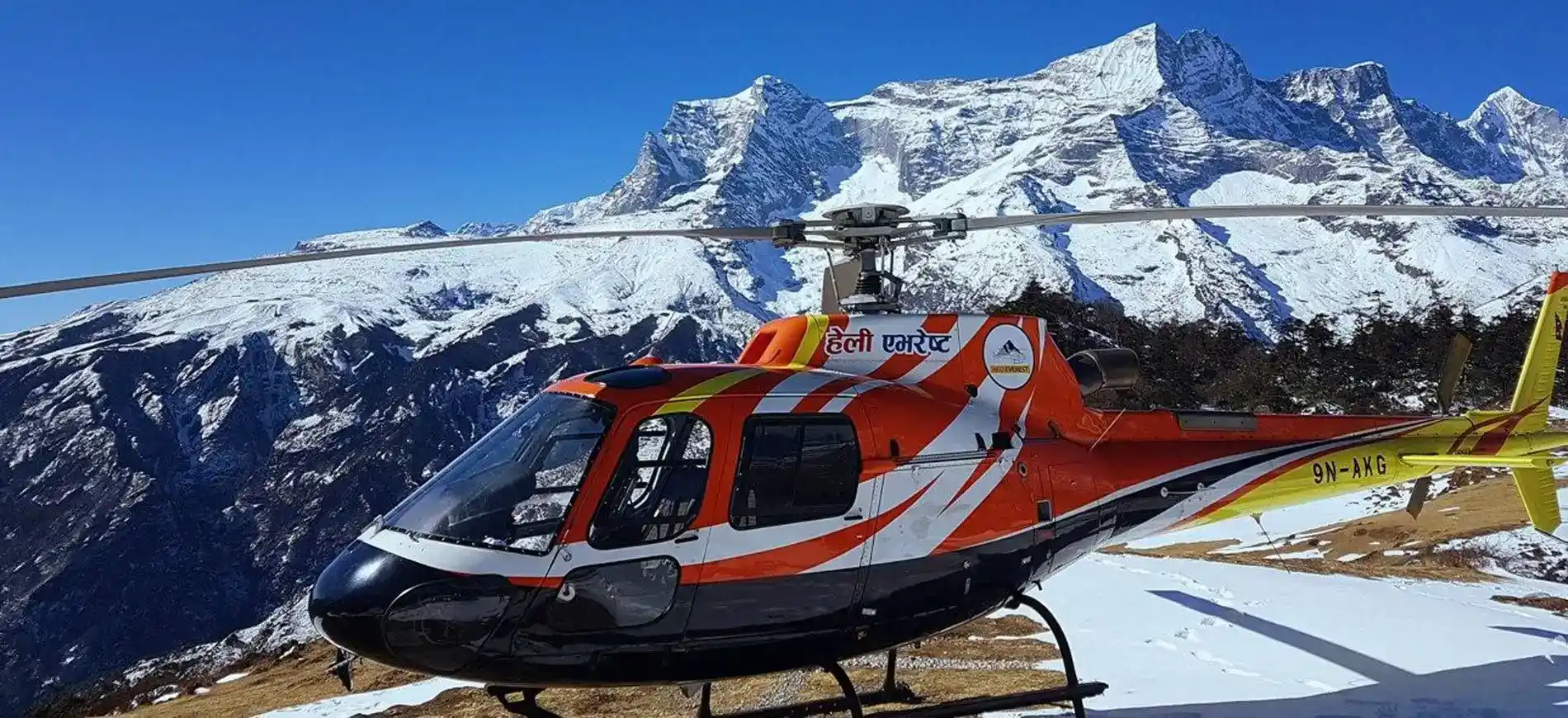
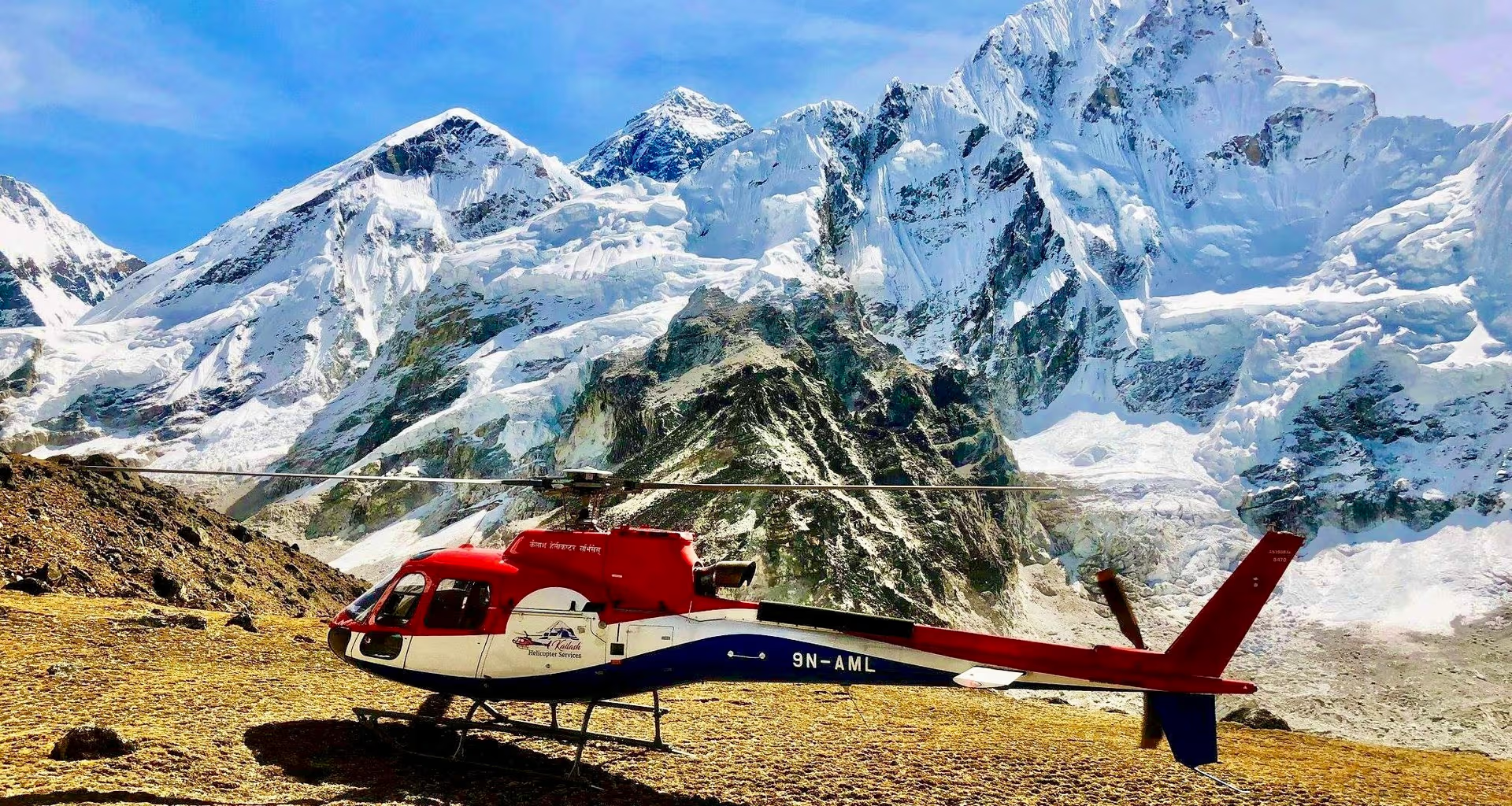
The helicopter return is one of the biggest advantages of this trek. After visiting Everest Base Camp and hiking to Kala Patthar, you fly from Gorak Shep to Kathmandu instead of walking back for several days through Lobuche, Dingboche, Tengboche, Namche, Phakding, and Lukla. This saves around 3 to 4 days, reduces total hiking distance, and gives your journey a smooth, scenic, and memorable ending. The helicopter flight offers breathtaking aerial views of glaciers, valleys, rivers, Sherpa villages, and snow-covered Himalayan peaks. You still earn the Everest Base Camp achievement by walking there, then return with comfort, beauty, and style.
Experience Flying by Helicopter in Nepal
Flying by helicopter in Nepal is one of the most exciting moments of the Everest journey. After days of walking through mountains, the helicopter lift from Gorak Shep feels thrilling, emotional, and unforgettable. As the helicopter rises, you see glaciers, deep valleys, high ridges, Sherpa villages, rivers, and shining snow peaks from the sky. The aerial view of the Khumbu region gives a powerful feeling of victory. You look down at the trail you walked and feel proud of every step. This helicopter return is fast, scenic, comfortable, and full of excitement from takeoff to landing.
Main Attractions of the Helicopter Experience
The helicopter return from Gorak Shep is not only a transfer. It is one of the strongest highlights of the whole trek. You enjoy aerial views of the Khumbu Glacier, high Himalayan valleys, dramatic ridges, Sherpa villages, rivers, and snow-covered peaks. The excitement begins the moment the helicopter lifts from the high mountain landing area. The scenery changes every second, giving you a cinematic flight above Nepal’s most famous trekking region. It saves time, adds comfort, and gives your Everest journey a grand emotional finish. For many trekkers, this flight becomes the most exciting memory of the trip.
Why Choose Sole Encounters for Everest Base Camp Helicopter Return Trek?
Yes, we can organize this trek and make it a great trip for you. Sole Encounters organizes the Everest Base Camp Trek with Helicopter Return to Kathmandu because it gives travelers the best balance of real trekking adventure, safe planning, local knowledge, and time-saving comfort. We arrange local guides, permits, accommodation, helicopter coordination, sightseeing, transport, airport transfers, porter support, cultural experiences, and personal guest care. Our team understands the Everest trail, altitude, weather, lodges, culture, and real mountain conditions. Travel with locals, support Nepali communities, and experience Everest with confidence, care, and genuine Himalayan knowledge.
Related Everest and Nepal Trekking Trips
Choose More Himalayan Treks with Sole Encounters
If you love the Everest Base Camp Trek with Helicopter Return, you may also choose other beautiful trekking adventures in Nepal. The Classic Everest Base Camp Trek is best for travelers who want to walk both ways and enjoy the full traditional Khumbu route. The Everest Base Camp via Gokyo Lake Trek is more adventurous, with turquoise lakes, high passes, and dramatic Everest views. The Annapurna Circuit Trek 2026-2027 offers huge landscape variety, from green valleys to dry highlands and Thorong La Pass. The Manaslu Circuit Trek is ideal for trekkers looking for a quieter and more remote Himalayan trail. The Annapurna Base Camp Trek is a shorter mountain journey into the Annapurna Sanctuary. The Langtang Valley Trek is a peaceful trek near Kathmandu with Tamang culture, forests, rivers, and mountain views.
Book Your Everest Base Camp Heli Return Trek Now
Your Everest dream is waiting. This is your moment to walk to Everest Base Camp, stand below the world’s highest mountain, feel sunrise from Kala Patthar, and fly back to Kathmandu by helicopter over the Himalayas. Do not keep this dream for someday. Make it real with Sole Encounters.
For booking, trip details, cost, itinerary, sightseeing, logistics, and personal assistance, contact Prashant Nepal, Guest Relation Manager.
Website: www.soleencounterstrek.com
Email: info@soleencountesrtrek.com
WhatsApp: +977 9849046662
Book Now and Secure Your Everest Adventure
Join Sole Encounters for a safe, scenic, eco-friendly, and unforgettable Everest Base Camp Trek with Helicopter Return to Kathmandu. We organize the trek, helicopter return, Kathmandu sightseeing, local experience guide, transport, permits, hotels, training advice, and all logistics for your trip. Book now, travel with trusted local experts, and turn your Everest dream into a lifetime achievement.
Everest Base Camp Trek with Helicopter Return to Kathmandu Itinerary Close All
Your Everest adventure begins upon arrival at Tribhuvan International Airport in Kathmandu. A representative will greet you and transfer you to your hotel in the city. After check-in, you can rest or explore the lively streets of Thamel, known for its trekking shops, cafés, and cultural atmosphere.
In the evening, enjoy a welcome dinner and a detailed trek briefing. During this meeting, the guide will review the itinerary, check your equipment, and assist with any last-minute preparations for the trek.
Food
Welcome Dinner
Accommodation
Hotel
Elevation
1400
Your journey into the Everest region begins with a scenic flight to Lukla. The flight takes about 35 minutes from Kathmandu, or about 20 minutes from Ramechhap after a 6-hour drive from the capital.
Upon arrival in Lukla, you will meet your trekking crew and begin the trek to Phakding. The trail follows gentle paths through small settlements, crosses several suspension bridges, and runs alongside the Dudh Koshi River. The trek covers about 8 to 9 kilometers and takes around 3 to 4 hours.
If your flight is cancelled due to bad weather, you will have the opportunity to fly the next day. Flights to Lukla are usually scheduled early in the morning and depend on weather conditions.
Stay in touch with your guide or organizer for updates, and enjoy your first day on the trail.
Food
Breakfast / Lunch / Dinner
Accommodation
Teahouse
Elevation
2620
Today’s trek leads you through dense pine forests and over suspension bridges, entering the stunning Sagarmatha National Park. The day ends with a challenging climb to Namche Bazaar, where you’ll catch your first glimpse of Mt. Everest.
You’ll walk approximately 11-12 km in about 7 hours, gaining 830 meters in altitude. The trail is mostly uphill with rocky sections and some gentle descents. Along the way, you cross the famous Hillary Suspension Bridge, one of the most exciting bridge crossings on the Everest Base Camp trail.
Namche Bazaar is a lively Sherpa town and a key acclimatization stop, serving as the commercial center of the Khumbu region. You’ll spend two nights here to rest and adjust to the altitude. Historically, Namche was a vital trading hub for Tibetan goods.
Food
Breakfast / Lunch / Dinner
Accommodation
Teahouse
Elevation
3440
Today is set aside for acclimatization. A short hike to Everest Viewpoint helps your body adjust to the altitude while offering spectacular mountain views.
The round-trip hike takes about 4 to 5 hours and covers approximately 5 to 6 kilometers. From the viewpoint, you can see Everest, Lhotse, and Ama Dablam. After enjoying the scenery, return to Namche Bazaar for rest.
In your free time, you can explore the Sherpa Museum, visit local markets, or relax in one of the cafés in town.
Food
Breakfast / Lunch / Dinner
Accommodation
Teahouse
Elevation
3440
Leaving Namche, the trail follows a scenic ridge with views of Everest, Lhotse, and Ama Dablam. After descending to the riverside village of Phunki Tenga, the route climbs steadily through forest to Tengboche.
The trek takes about 6 to 7 hours with an altitude gain of around 500 meters. Lunch is usually taken at Phunki Tenga before the final ascent.
Tengboche is home to the region’s largest monastery, an important spiritual center for the Sherpa community. The monastery also offers panoramic mountain views and a peaceful setting.
Food
Breakfast / Lunch / Dinner
Accommodation
Teahouse
Elevation
3860
The trail continues through alpine landscapes as you head toward Dingboche. You will pass through Debuche and stop for lunch in Pangboche, the last permanent village on the route.
The trek covers about 10 to 11 kilometers over 6 to 7 hours, with an altitude gain of around 550 meters. The terrain includes gentle climbs, flat sections, and open mountain scenery.
Dingboche is a peaceful village surrounded by stone walls and mountain views. You will stay here for two nights to acclimatize before heading higher.
Food
Breakfast / Lunch / Dinner
Accommodation
Teahouse
Elevation
4410
Today is another acclimatization day. A short hike helps your body adapt to the higher altitude.
You may hike to Nagarjun Hill at about 5,100 meters or toward the Chhukung Valley. Both routes offer impressive views of Makalu, Lhotse, and Ama Dablam. The hike usually takes 3 to 4 hours, depending on the route.
After the hike, return to Dingboche for rest and preparation for the higher elevations ahead.
Food
Breakfast / Lunch / Dinner
Accommodation
Teahouse
Elevation
4410
Today’s trail gradually climbs through open alpine terrain. After crossing a glacial stream, you will stop at Thukla for a rest before ascending to the memorial area at Thukla Pass, which honors climbers lost on Everest.
The path then continues across rocky ground toward Lobuche, a small settlement near the Khumbu Glacier. You will walk about 10 kilometers over 5 to 6 hours, gaining roughly 500 meters in elevation.
Food
Breakfast / Lunch / Dinner
Accommodation
Teahouse
Elevation
4930
Today is the highlight of the trek. You walk from Lobuche to Gorakshep and continue onward to Everest Base Camp.
The trail crosses rocky and glacial terrain with a gradual but steady climb. After a short break at Gorakshep, continue toward base camp. The round trip covers about 13 to 15 kilometers and takes 7 to 8 hours.
Spend some time at Everest Base Camp, enjoying views of the Khumbu Icefall and surrounding peaks, before returning to Gorakshep for the night. Tomorrow morning, you will hike to Kala Patthar for sunrise before the helicopter flight back.
Teahouses in Gorakshep are basic with limited facilities due to the high altitude.
Food
Breakfast / Lunch / Dinner
Accommodation
Teahouse
Elevation
5364
Early in the morning, hike to Kala Patthar at 5,545 meters for sunrise views of Everest and surrounding peaks. This viewpoint offers the best close-up panorama of the mountain.
After returning to Gorakshep for breakfast, board a helicopter for a scenic flight back to Kathmandu via Lukla. The flight provides spectacular aerial views of the Khumbu Glacier and Himalayan landscapes.
Helicopter departures usually take place in the morning, but may be delayed due to weather. It is recommended to keep one extra night in Kathmandu for flexibility.
Food
Farewell Dinner
Accommodation
Hotel
Elevation
1400
Everest Base Camp Trek with Helicopter Return to Kathmandu Cost Includes
- Airport Transfers: All pickup and drop-off services
- Accommodation in Kathmandu: Comfort hotel with breakfast before the trek
- Helicopter Flights: Kathmandu to Lukla and Gorak Shep to Kathmandu
- Trekking Permits: Sagarmatha National Park entry permit and Pasang Lhamu Rural Municipality Permit
- Experienced Guide: Professional English-speaking trekking guide
- Porters: One porter for every two trekkers
- Crew Meals and Insurance: All meals and insurance for guides and porters
- Accommodation during Trek: 6 nights comfort & 2 nights normal Teahouses or lodges
- Meals: Three meals per day during the trek with tea
- Welcome Dinner: Traditional Nepali meal in Kathmandu
- Farewell Dinner: Final group dinner in Kathmandu
- Helicopter Rescue: Emergency coverage with free assistance
- Trekking Map: Detailed map of the Everest region
- First Aid Kit: Basic first aid kit
- Duffle Bag and Trekking Cap: Provided for use during the trek
- Local Government Taxes: All applicable local and administrative taxes included
Everest Base Camp Trek with Helicopter Return to Kathmandu Cost Excludes
- International Flights and Nepal Entry Visa: Not included
- Travel Insurance: Must cover evacuation, medical treatment, and trip cancellation
- Meals in Kathmandu: Lunch and dinner are not included
- Personal Expenses: Snacks, drinks, hot showers, and device charging
- Extra Services: Anything not mentioned in the itinerary
- Tips: Suggested tipping is 15 to 20 percent of the total trip cost
- Single Room Upgrade: Extra cost for single rooms during the trek and in Kathmandu
- Early Arrival or Late Departure: Additional hotel nights required due to early arrival or late departure
- Return From Trek for Any Reason: Extra costs apply if returning earlier than planned
- Trekking Gear: Personal gear such as boots and clothing
- Medication: Personal medication and health supplies
Everest Base Camp Trek with Helicopter Return to Kathmandu Altitude Profile
FAQs Close All
The Everest Base Camp Trek with Helicopter Return is a premium Everest trekking package where you walk from Lukla to Everest Base Camp, 5,364m / 17,598ft, hike to Kala Patthar, 5,545m / 18,192ft, and return by helicopter from Gorak Shep to Kathmandu. This trek gives you the real adventure of reaching Everest Base Camp on foot, while saving time and avoiding the long walk back to Lukla. It is perfect for travelers who want achievement, comfort, scenery, and a faster return.
The Everest Base Camp Trek with Helicopter Return is a moderate to challenging high-altitude trek. You do not need climbing experience, but you should have good fitness, strong walking ability, and a positive mindset. The trail includes uphill climbs, downhill sections, stone steps, suspension bridges, river valleys, and rocky high-altitude paths. The main challenge is altitude, not technical climbing. With proper acclimatization, slow walking, experienced local guides, and good preparation, many fit beginners and regular hikers can complete this trek safely and successfully.
The Everest Base Camp Heli Return Trek usually takes around 9 to 12 days, depending on the itinerary, acclimatization plan, Lukla flight schedule, weather, and Kathmandu arrangements. Because you fly back by helicopter from Gorak Shep, you save around 3 to 4 days compared with the classic Everest Base Camp trek. This makes it a great choice for travelers who have limited time but still want the full Everest Base Camp walking experience. Sole Encounters can organize a safe and well-paced itinerary based on your travel dates.
The total walking distance on the Everest Base Camp Trek with Helicopter Return is approximately 65 to 75 kilometers, 40 to 47 miles. The distance can change slightly depending on lodge location, acclimatization hikes, trail conditions, and guide decisions. A regular Everest Base Camp trek with return walking can be around 120 to 130 kilometers, 75 to 81 miles. The helicopter return helps reduce walking distance and saves time, while still allowing you to earn the achievement of reaching Everest Base Camp by foot.
The helicopter return usually starts from Gorak Shep, 5,164m / 16,942ft, after you visit Everest Base Camp and hike to Kala Patthar. From Gorak Shep, the helicopter flies back toward Kathmandu, depending on weather, visibility, safety, and operational conditions. This flight is one of the most exciting parts of the journey. You see glaciers, valleys, rivers, ridges, Sherpa villages, and snow-covered Himalayan peaks from the air. The helicopter return is fast, scenic, comfortable, and a powerful ending to your Everest Base Camp adventure.
The best time for the Everest Base Camp Trek with Helicopter Return is September to December and February to May. These months usually offer clearer skies, better mountain views, and more stable trekking conditions. September to December gives crisp air, strong visibility, and beautiful autumn scenery. February to May offers warmer weather, spring flowers, and active Everest expedition season. Mountain weather can still change quickly, so Lukla flights and helicopter returns always depend on safety and visibility. Booking early is recommended during peak seasons.
Accommodation is arranged in the best available lodges and teahouses along the Everest Base Camp route. With Sole Encounters, accommodation can be upgraded where possible up to Dingboche, giving you better comfort, warmer dining spaces, and improved lodge standards. In Lobuche and Gorak Shep, accommodation is normally basic because these villages are located at very high altitude with limited lodge options. Rooms are simple, facilities are limited, and choices are fewer. This is part of the real Everest experience, where the reward is location, scenery, culture, and achievement.
Book with Sole Encounters because we are a local Nepal trekking company that can organize your complete Everest journey from start to finish. We arrange guides, permits, accommodation, Lukla flights, helicopter return, airport transfers, porter support, Kathmandu sightseeing, local experience tour guide, and all trip logistics. Yes, we can organize this trek and make it a great trip for you. Travel with locals, support responsible tourism, save time with helicopter return, and experience Everest with safety, care, confidence, and real Himalayan knowledge.
Book Now: www.soleencounterstrek.com
Email: info@soleencountesrtrek.com
WhatsApp: +977 9849046662


- Best price guaranteed
- No booking fees
- E-ticket/Mobile voucher
Response Time 3 Hours , Response Rate 100%
Similar Packages


14 Reviews
19 Reviews

26 Reviews
25 Reviews
23 Reviews
David Alvarez
AustraliaSeamless Logistics and Absolute Peace of Mind!
29th May, 2026
Choosing Sole Encounters for our Everest Base Camp trek was the best decision we made. From the initial booking to the final helicopter flight out of Gorak Shep, their professionalism was unmatched.
Trekking to EBC is physically demanding, but knowing our logistics were handled flawlessly allowed us to just focus on the journey. Our guide was incredibly knowledgeable about altitude safety, checking our oxygen levels daily. The absolute highlight, though, was the helicopter return. After reaching the base camp, skipping the four-day walk back and soaring over the Khumbu Icefall in a chopper was an unforgettable, premium experience. If you want a highly trusted, safe, and top-tier luxury trekking agency in Nepal, look no further."
Sarah D
United KingdomAn Unforgettable Adventure with a Trusted Team
23rd May, 2026
I can't recommend Sole Encounters Adventures enough! As a solo traveler, safety and trust were my top priorities. The team treated me like family from day one. My guide and porters were supportive, patient, and incredibly encouraging when the trail got tough.
The 'Trek Up, Fly Return' itinerary is perfect. Reaching Everest Base Camp was a massive personal achievement, but being able to board a helicopter right afterward was pure magic. The aerial views of Everest, Lhotse, and Ama Dablam from the chopper window were absolutely breathtaking. It saved our knees the grueling downhill trek and gave us a spectacular finale. A 10/10 experience!
Elena R
United States Minor Outlying IslandsThe Perfect Balance of Adventure and Efficiency
15th May, 2026
If you want to experience the magic of Everest but have a tight schedule, this is the way to do it. Sole Encounters executed this itinerary perfectly. Their deep experience in the Himalayas shows in how they manage acclimatization and altitude.
We got the full, authentic experience of trekking through the Sherpa culture and standing at Base Camp, but the helicopter return from Gorak Shep back to Lukla (and then Kathmandu) was a game-changer. It saved us days of backtracking and provided a thrilling, bird's-eye view of the exact trails we had just walked. Highly professional, transparent pricing, and deeply trustworthy.
Sandro P
AustraliaA Dream Journey to Everest Base Camp Trek
9th May, 2026
Our Everest Base Camp Trek with helicopter return was truly a once-in-a-lifetime adventure. The trek was challenging, beautiful, and very well organized from start to finish. Reaching Everest Base Camp felt like a dream come true, and the helicopter return gave us breathtaking views of the Himalayas. Everything, including permits, lodges, meals, and flights, was handled professionally.
Emma Wilson
United KingdomBest Trekking Experience in Nepal
2nd May, 2026
The Everest Base Camp Trek with helicopter return exceeded all our expectations. Every day was special, from crossing suspension bridges to walking through peaceful mountain villages. The team was professional, supportive, and very well organized throughout the journey. After reaching Base Camp, the helicopter flight back was exciting, comfortable, and unforgettable.
Lucy
United StatesWell Organized and Truly Memorable
20th April, 2026
We had an amazing experience on the Everest Base Camp Trek with helicopter return. The itinerary was well planned, the accommodation was comfortable, and our guide was friendly and helpful every day. Trekking to Base Camp was physically demanding but completely worth it. The helicopter return made the journey even more special with stunning views of the Himalayas.